An EON AI Ventures sector initiative ↗ Image library3D modelResources
Training solutions

Healthcare applications · 15 training ideas

See the task.
Explore the learning.

People, equipment and the decisions worth practising. Explore fifteen training ideas, from accessory identification to a clear handover.

These are illustrative training concepts. The technology benefits describe proposed learning support; case-specific models and completed Genesis lessons are not available here. Educators would agree the equipment sources, procedure and review criteria for each pilot.

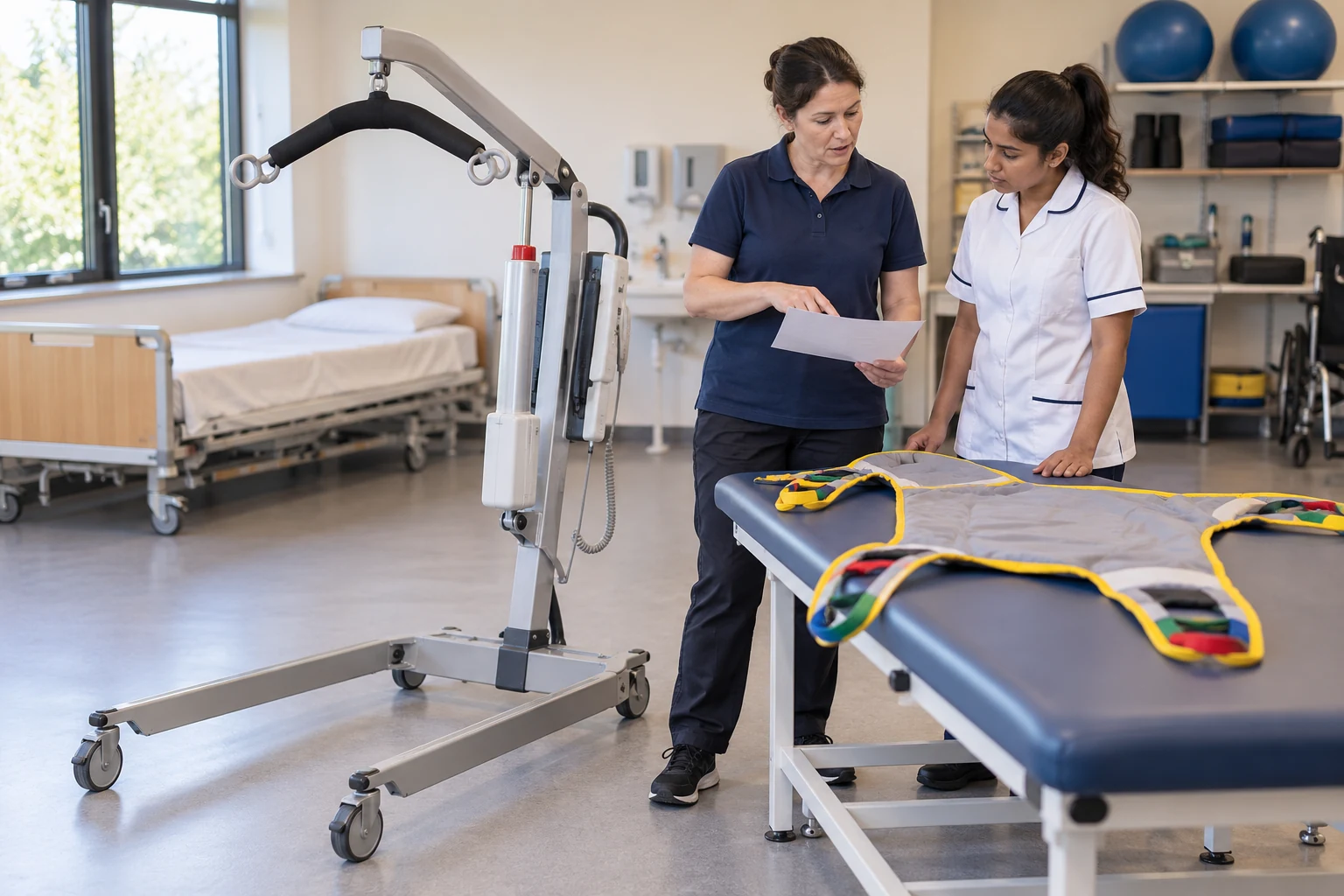
Educator and trainee compare a paper record beside an unloaded lift and a sling supported on a padded bench.
HEA-NEW-01 · Illustrative training scene

01 / HEA-NEW-01

Check a lift and sling.

An educator and trainee compare an unloaded lift, a supported sling and a paper applicability record in a skills room.

Learner task
Identify the lift and sling represented in the exercise. Use the source record to explain whether applicability is established or needs clarification.
Proposed technology benefit
A reviewed 3D equipment representation could let learners compare attachment features with the source before an educator-led discussion.
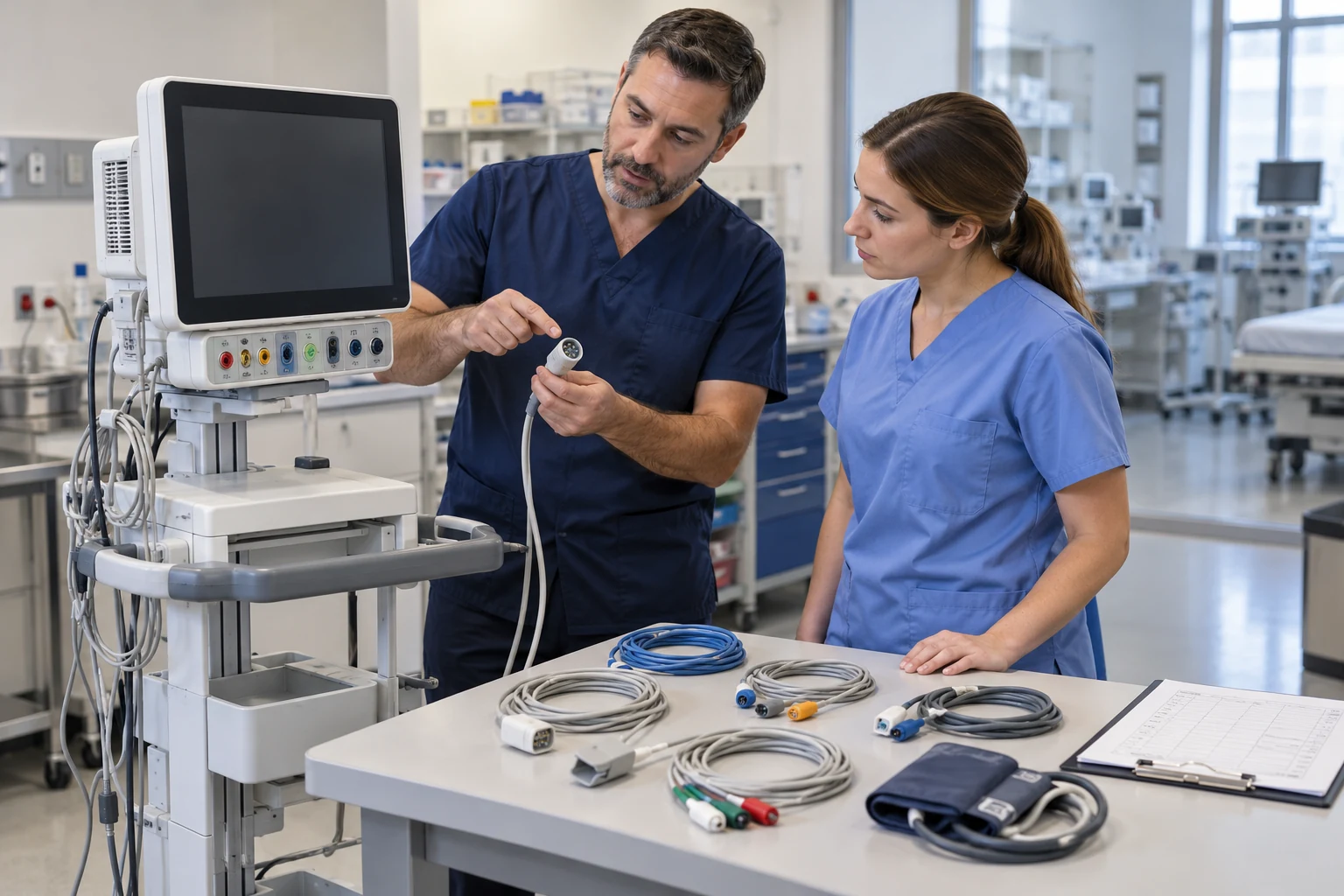
Educator holds a monitor accessory connector while a trainee compares the organised cables at an idle monitor station.
HEA-NEW-02 · Illustrative training scene

02 / HEA-NEW-02

Identify a monitor accessory.

A monitor training station and an organised set of accessories give two colleagues a concrete identity question to discuss.

Learner task
Distinguish the accessory in hand from similar-looking alternatives. Explain the source used and pass any unanswered identity question to the next reviewer.
Proposed technology benefit
Component-linked references and a branching rehearsal could make the evidence behind an accessory choice visible to the educator.
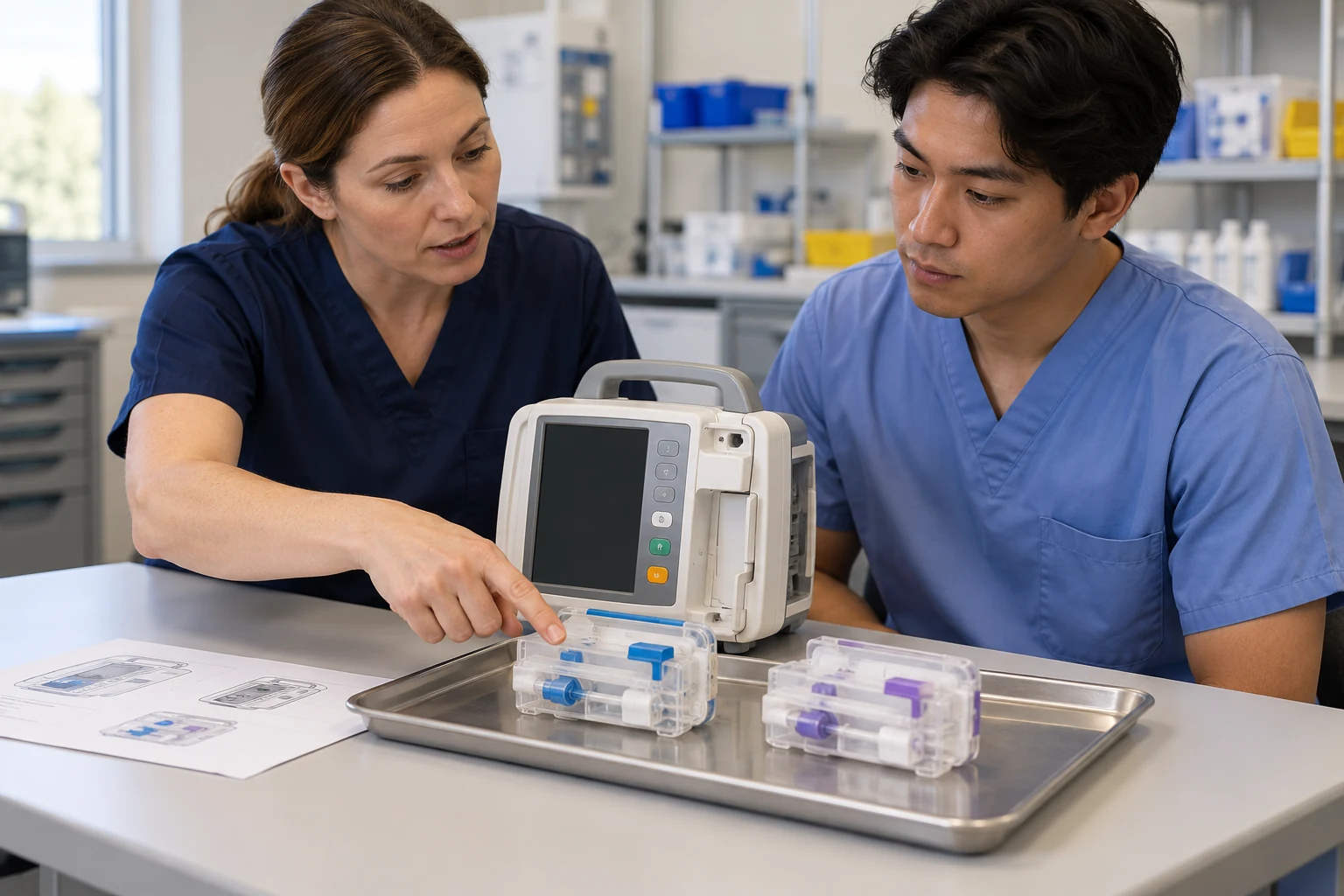
Educator points to two dry cassette examples on a metal tray beside an unpowered infusion pump trainer and paper illustrations.
HEA-NEW-03 · Illustrative training scene

03 / HEA-NEW-03

Compare pump cassettes.

Two dry cassette examples sit beside an unpowered pump trainer and printed source illustrations.

Learner task
Compare the examples with the exercise reference. Describe the identifying differences and explain which source is still needed before a choice can be confirmed.
Proposed technology benefit
A side-by-side digital comparison could let learners inspect distinguishing features and receive feedback on the evidence they selected.
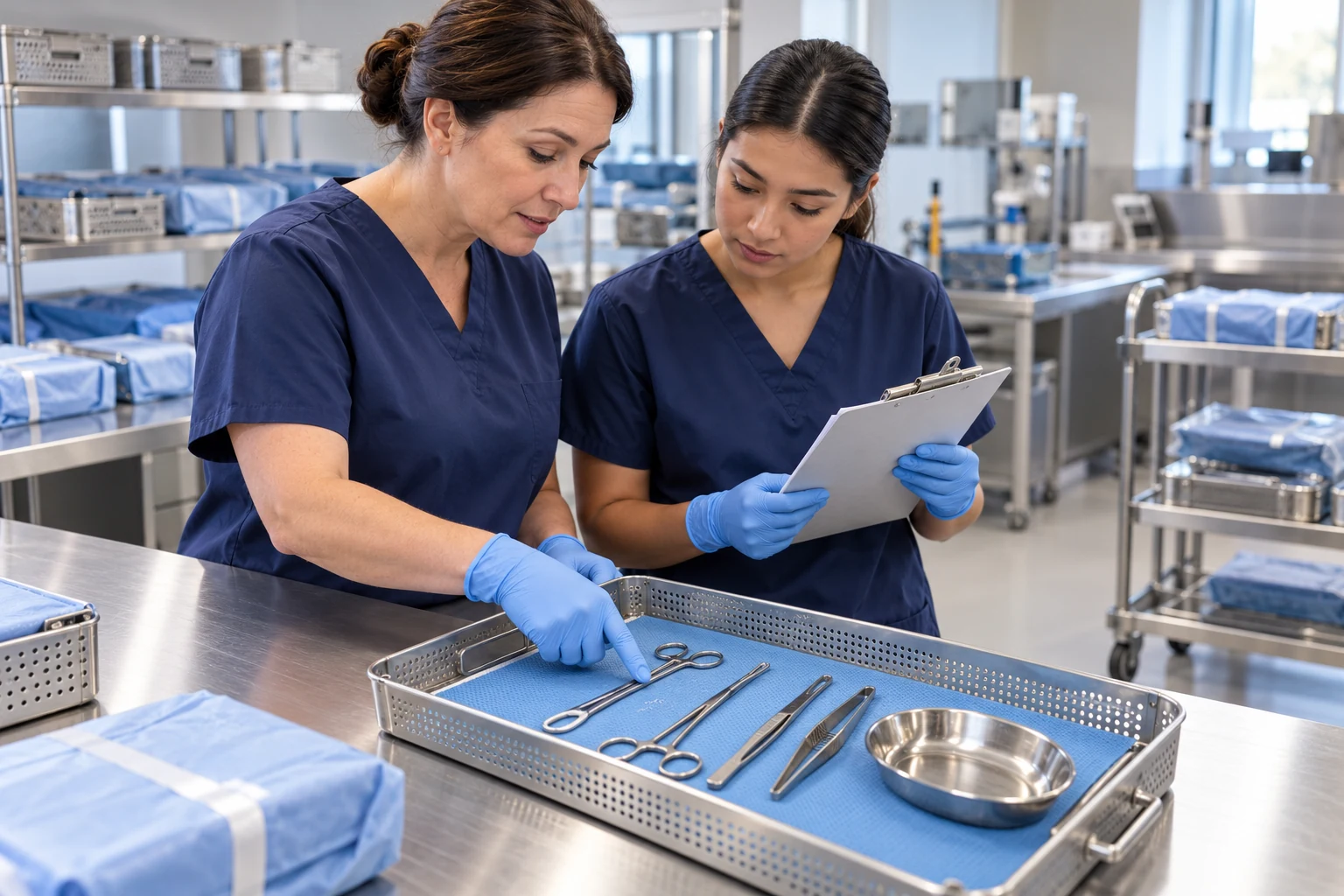
Educator points to supported training instruments while a trainee holds a clipboard at a skills-lab workbench.
HEA-NEW-04 · Illustrative training scene

04 / HEA-NEW-04

Review an instrument tray.

An educator and trainee review a representative instrument tray against its training inventory record.

Learner task
Describe what was compared, keep an unresolved entry visible and confirm that the receiving colleague understands the next review step.
Proposed technology benefit
A structured rehearsal could retain the comparison, discrepancy explanation and receiver acknowledgement as evidence for debrief.
Read the tray exercise ↗
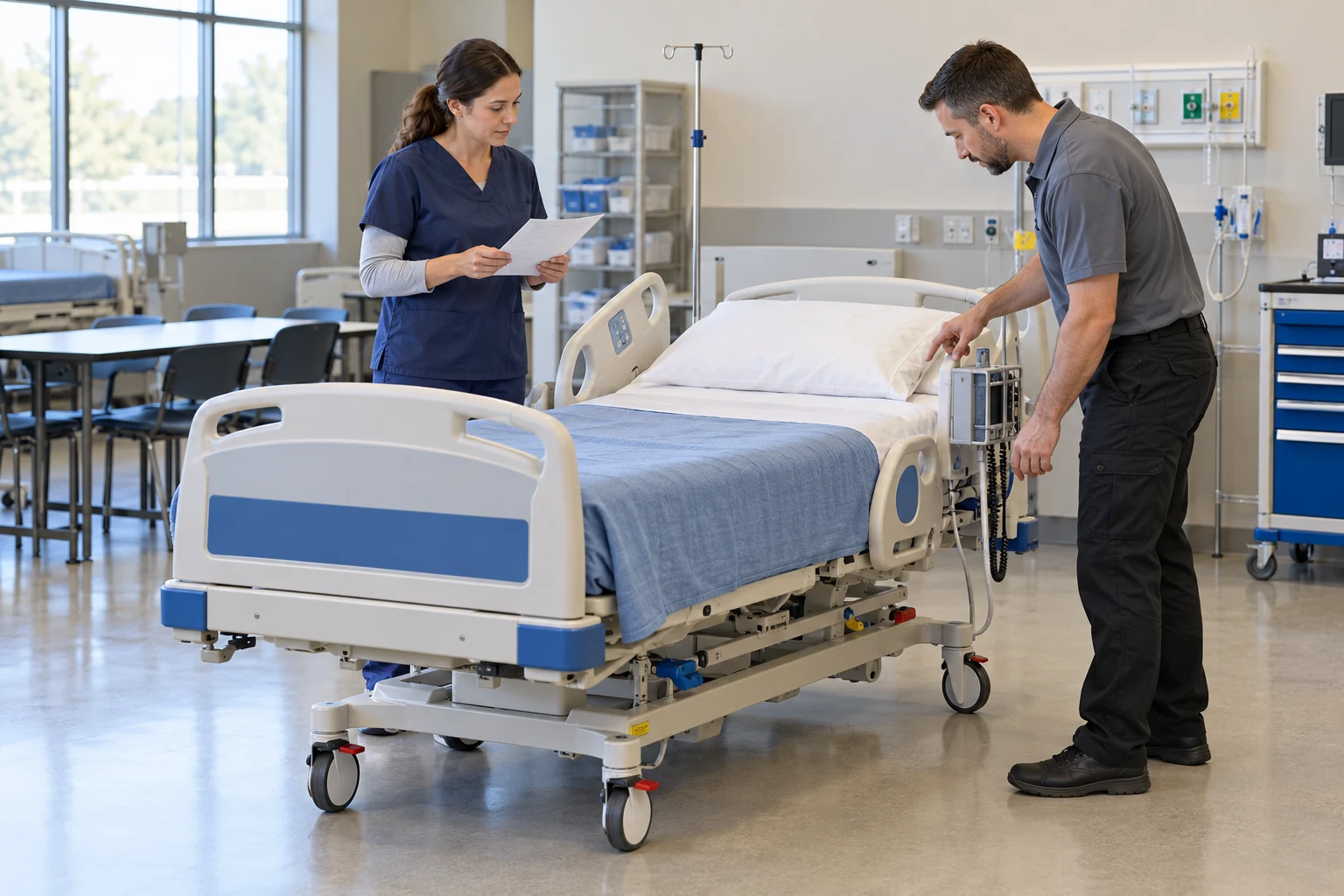
Biomedical colleague indicates an external attachment on an empty bed while an educator checks a paper status record.
HEA-NEW-05 · Illustrative training scene

05 / HEA-NEW-05

Review an empty bed.

A biomedical colleague indicates an external bed attachment while an educator checks the equipment-status record. The bed is unoccupied.

Learner task
Locate the attachment represented in the exercise and distinguish an observed condition from an assumption about the bed’s status.
Proposed technology benefit
Location-linked annotations could connect an external observation to its equipment record and give the next reviewer a clearer handover.
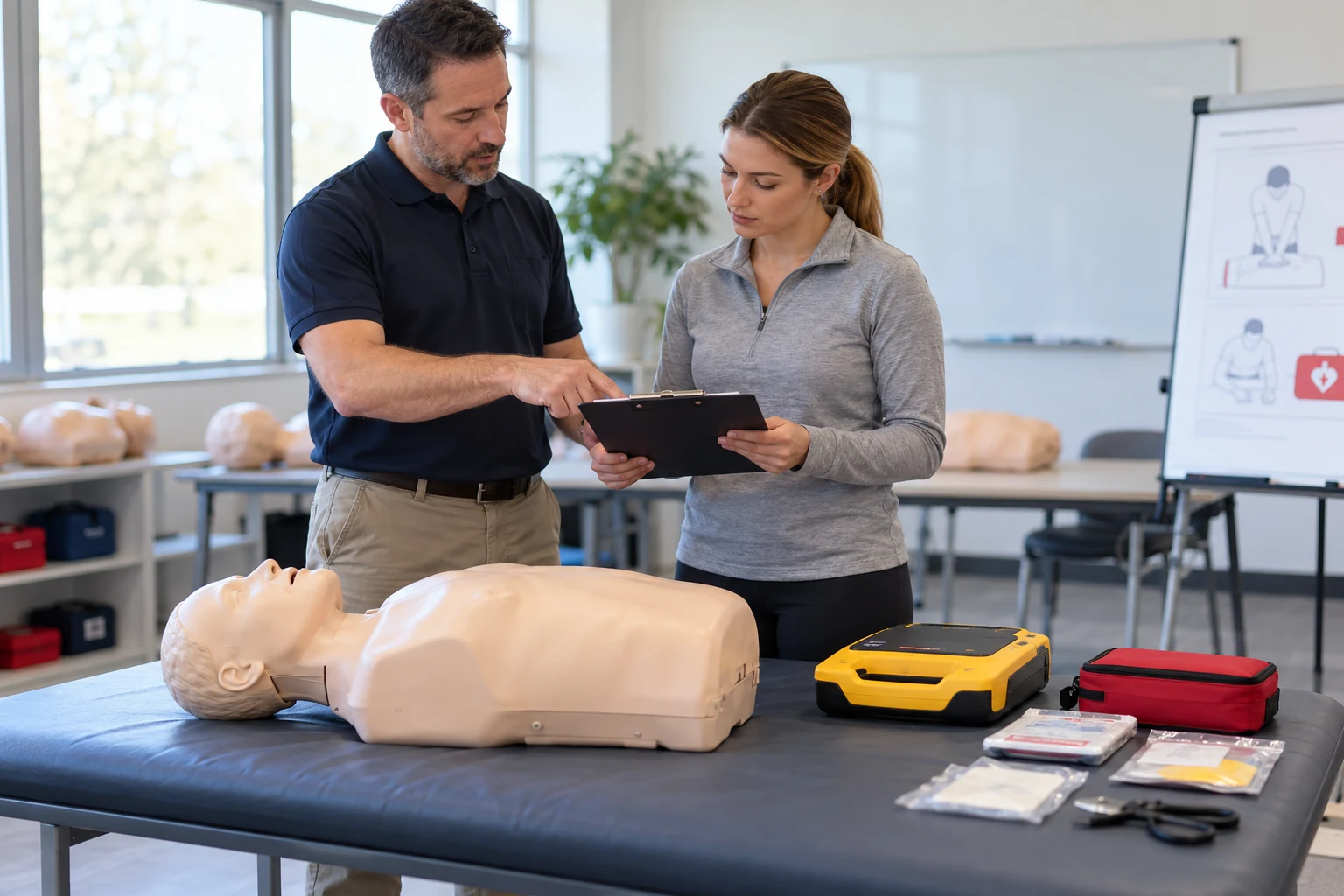
Educator and trainee review a clipboard beside an idle AED trainer, accessory packs and an artificial torso on a padded table.
HEA-NEW-06 · Illustrative training scene

06 / HEA-NEW-06

Prepare an AED training kit.

An idle AED teaching station, accessory packs and an artificial torso provide the setting for a readiness-record discussion.

Learner task
Compare the training kit with the educator’s exercise list. Identify the missing evidence or record entry before calling the teaching station prepared.
Proposed technology benefit
A guided kit-review exercise could make omissions and the learner’s reasoning visible before a supervised teaching session.
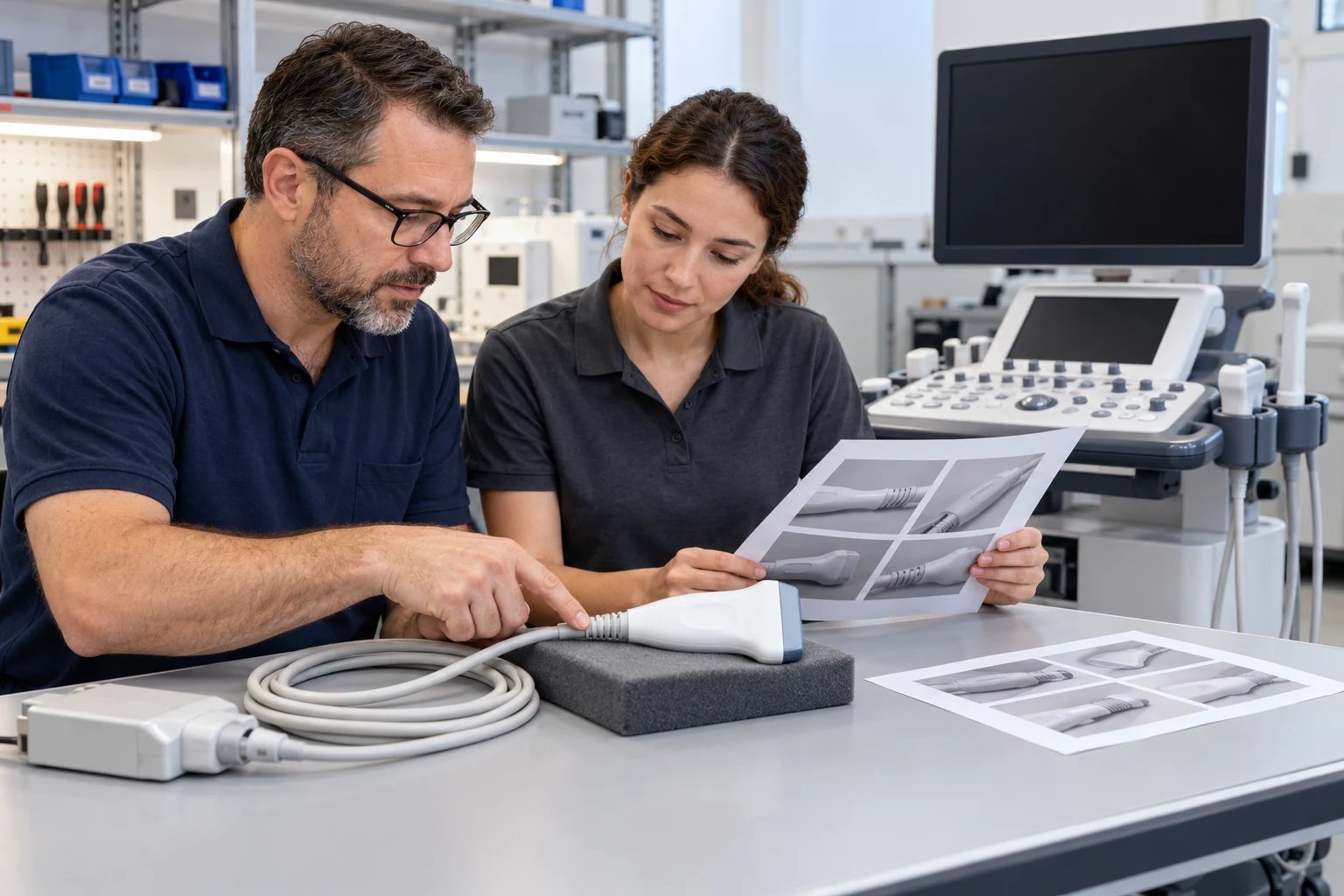
Two biomedical trainers compare an ultrasound probe strain relief with paper condition examples at an idle console.
HEA-NEW-07 · Illustrative training scene

07 / HEA-NEW-07

Describe a probe’s condition.

Two biomedical trainers compare a supported probe and cable with printed exterior-condition examples.

Learner task
Describe the visible exterior feature precisely and separate observation from a diagnosis. Hand over the reference and question for educator review.
Proposed technology benefit
Annotated condition examples could help learners practise consistent descriptions and preserve the exact location discussed in the handover.
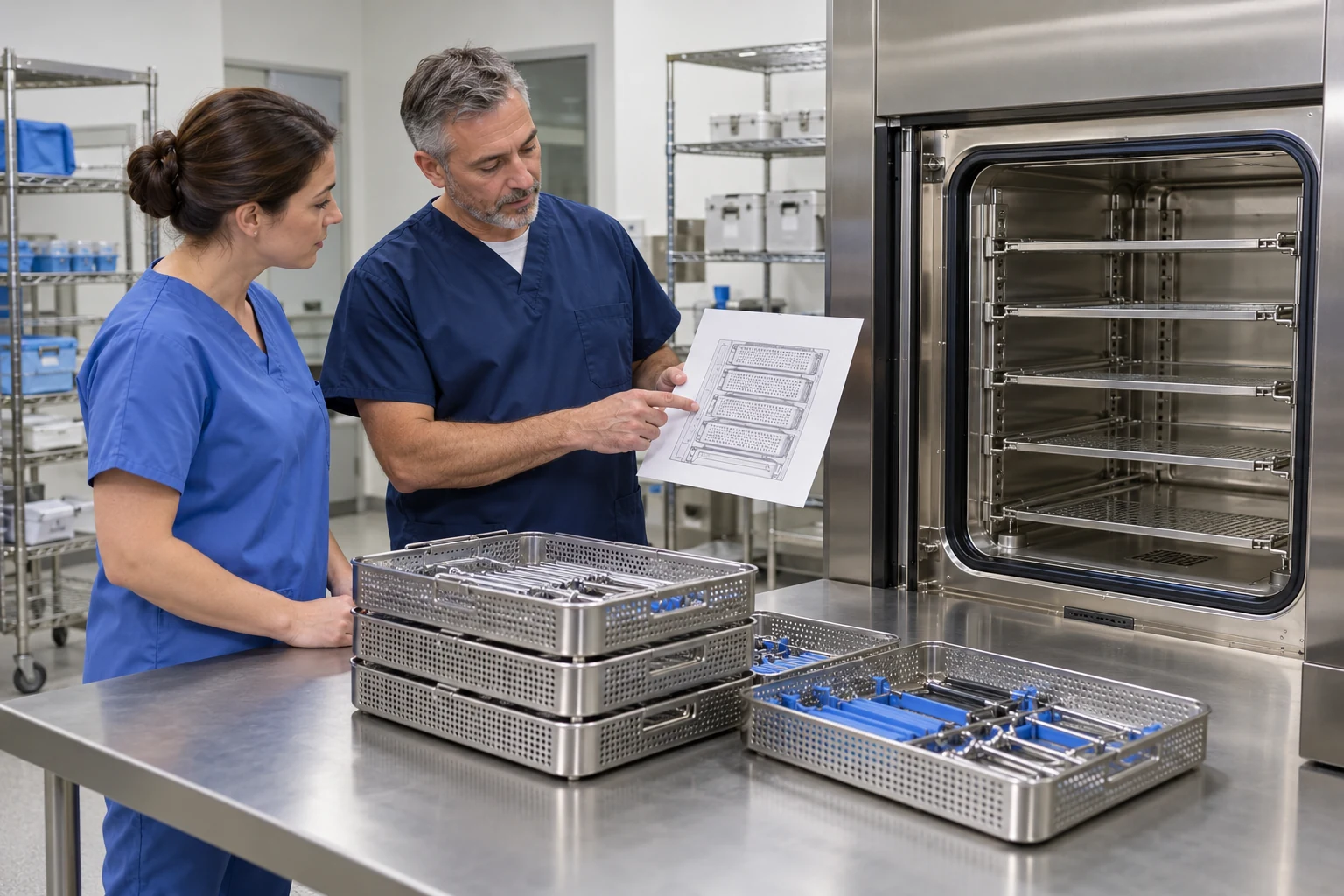
Educator and trainee compare a paper layout with supported instrument trays beside an open idle teaching chamber.
HEA-NEW-08 · Illustrative training scene

08 / HEA-NEW-08

Compare a tray layout.

An educator and trainee discuss inert tray arrangements beside an open, cold teaching chamber.

Learner task
Compare the exercise layout with the paper example. Explain an arrangement difference and name the source needed to resolve it.
Proposed technology benefit
A reviewed spatial rehearsal could let learners compare alternative layouts and explain their choices before educator feedback.
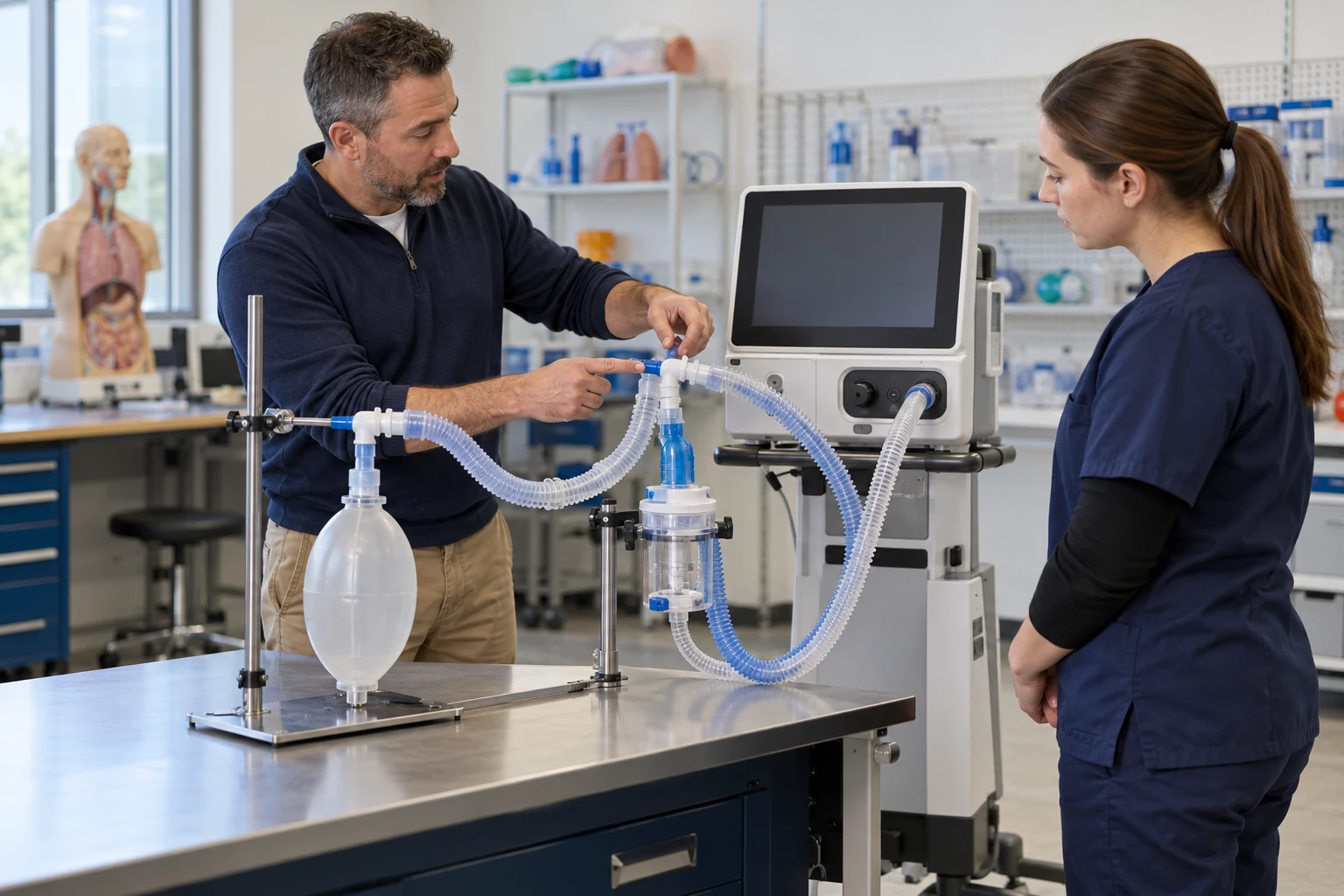
Educator and trainee discuss external components on a supported dry ventilator-circuit teaching assembly with a blank screen.
HEA-NEW-09 · Illustrative training scene

09 / HEA-NEW-09

Map a teaching circuit.

A dry teaching assembly makes external circuit components visible while an educator and trainee discuss a reference.

Learner task
Name the components represented in the exercise and map them to the source diagram. Explain any relationship that remains unclear.
Proposed technology benefit
A component map in a digital twin could link a named part to the source and help educators review the learner’s explanation.
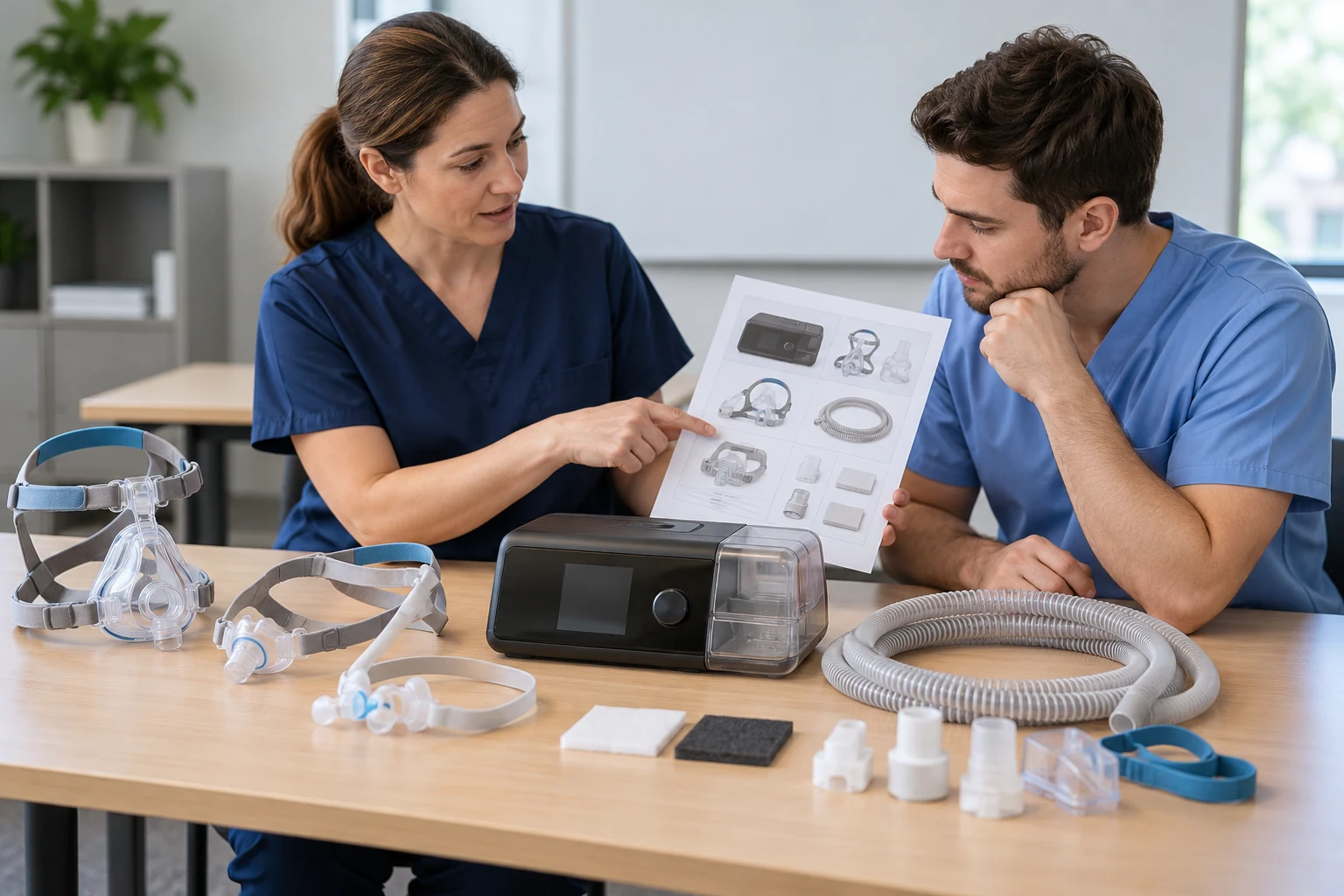
Educator and trainee compare a paper accessory sheet with loose masks and tubing beside an unpowered CPAP device.
HEA-NEW-10 · Illustrative training scene

10 / HEA-NEW-10

Identify CPAP accessories.

Loose masks, tubing and accessory samples sit beside an unpowered CPAP teaching device and a paper comparison sheet.

Learner task
Sort the representative accessories by their source description. Explain why a visual resemblance alone does not confirm the selection.
Proposed technology benefit
A source-linked comparison activity could let learners revisit confusing alternatives and receive feedback on their identification cues.
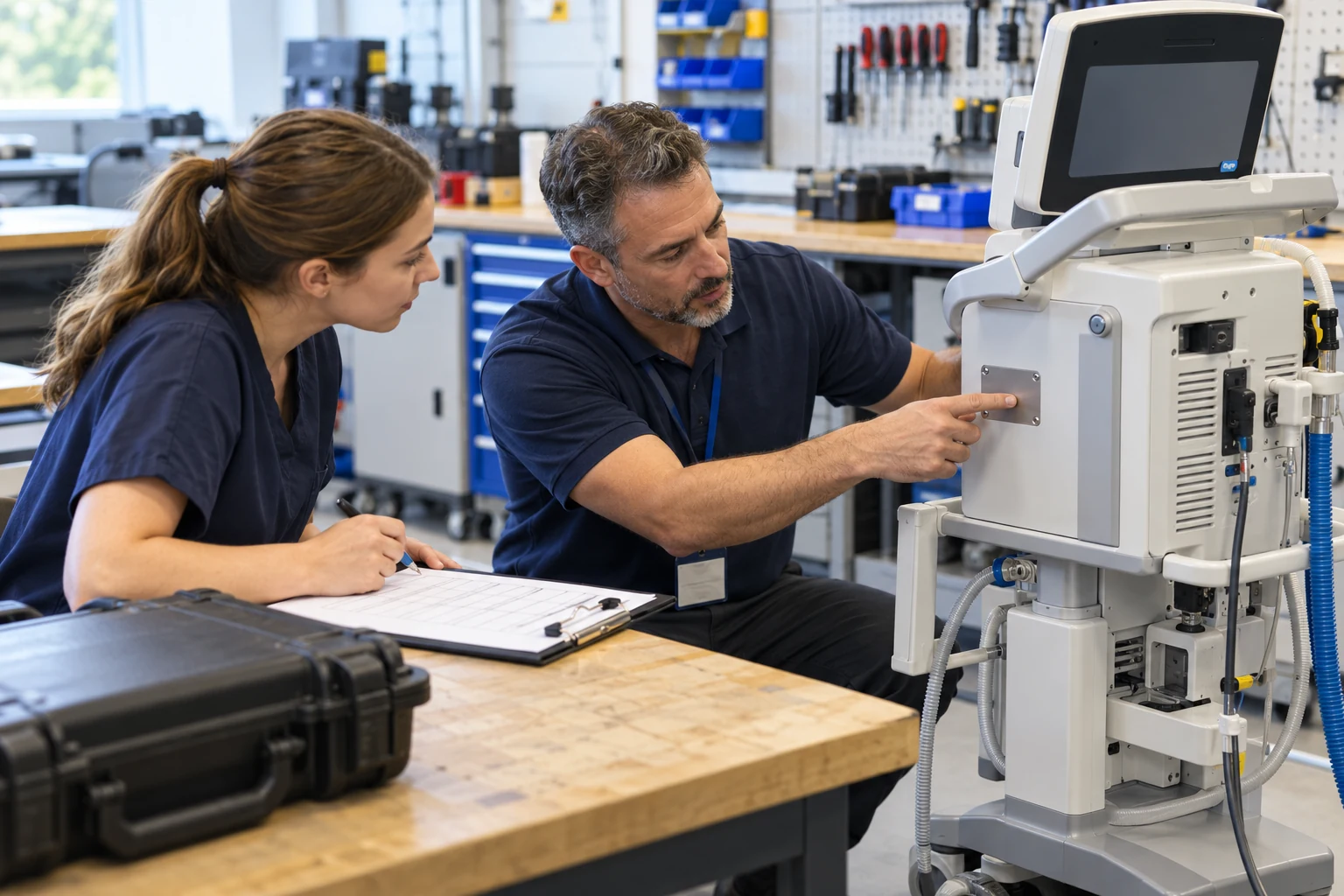
Biomedical educator points to a trainer identification plate while a trainee checks a synthetic symptom record at a workshop bench.
HEA-NEW-11 · Illustrative training scene

11 / HEA-NEW-11

Record a fault report.

A biomedical educator points to a device identification plate while a trainee checks a synthetic symptom record.

Learner task
Connect the equipment identity with the reported observation. Record what is known, what is missing and who should review the evidence next.
Proposed technology benefit
A structured evidence record could keep equipment identity, observations and pending questions together through the training handover.
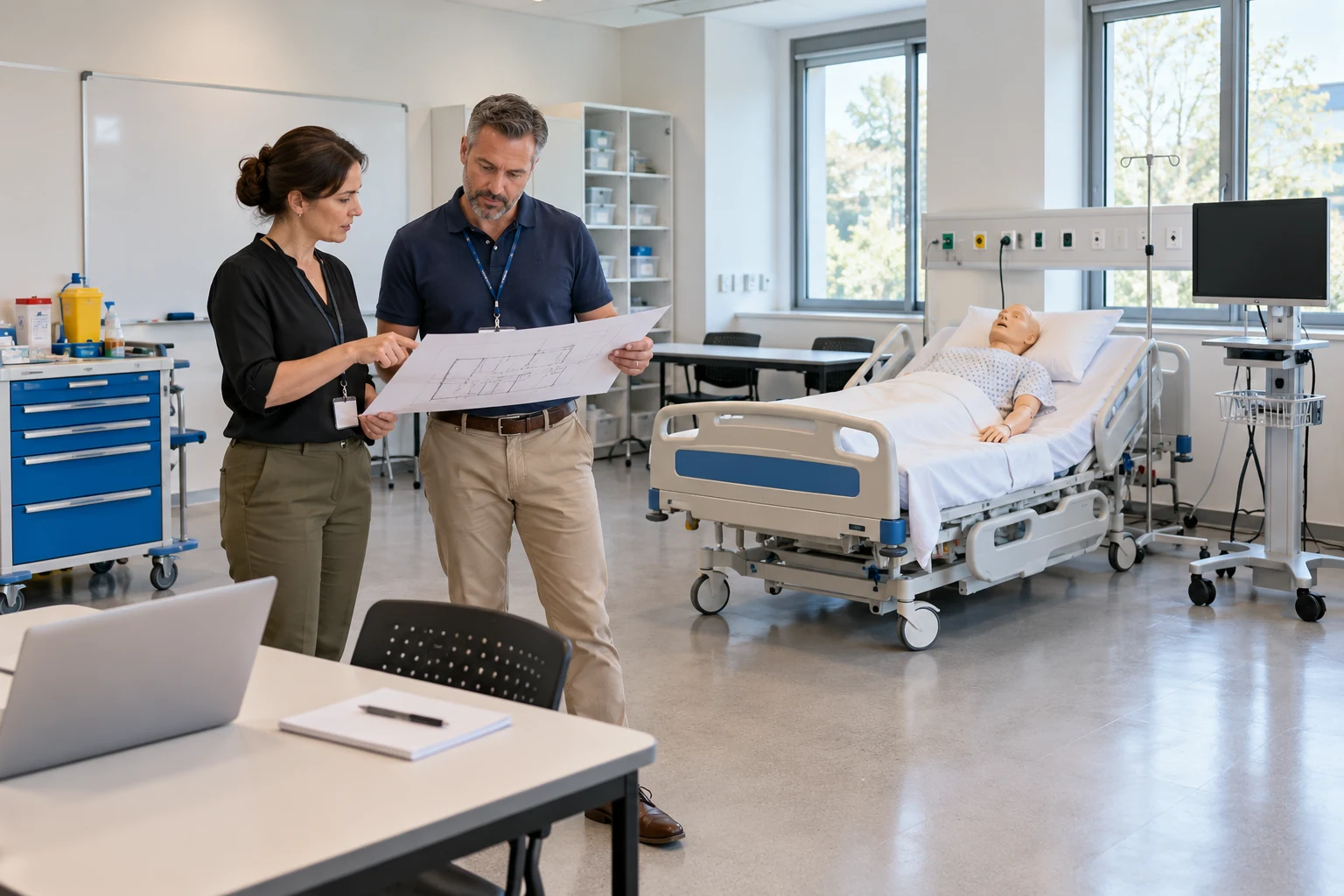
Simulation educator and facilities colleague review a room plan beside a mannequin bed and equipment carts in a teaching room.
HEA-NEW-12 · Illustrative training scene

12 / HEA-NEW-12

Plan a training room.

A simulation educator and facilities colleague compare equipment placement with a paper room plan. A mannequin occupies the teaching bed.

Learner task
Explain the route and equipment placement shown in the exercise. Identify an access question that needs a measured site check.
Proposed technology benefit
A spatial walkthrough could help teams discuss alternative teaching layouts and capture access questions before a room review.
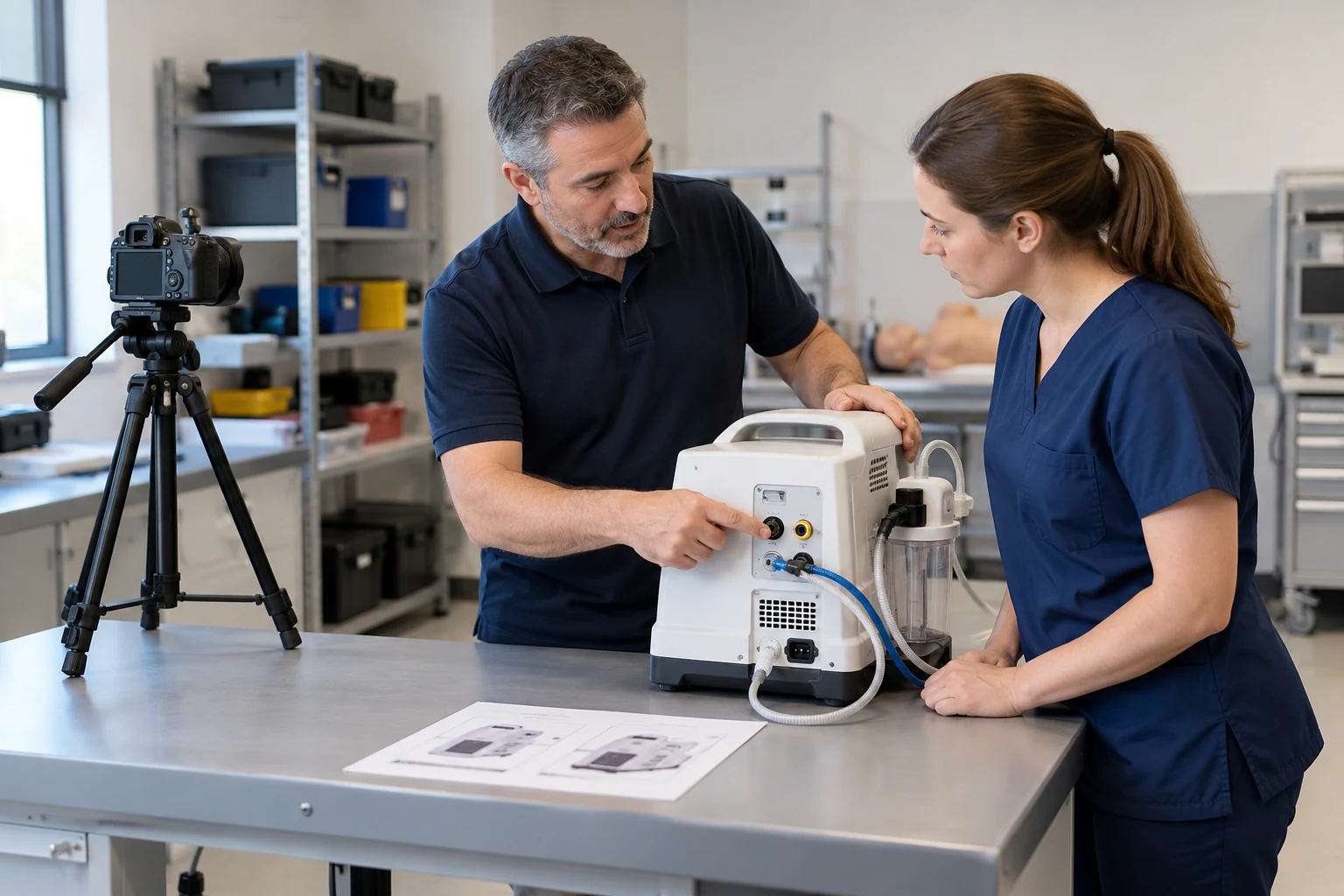
Experienced educator explains external equipment connectors to a learner beside an idle capture camera and paper reference images.
HEA-NEW-13 · Illustrative training scene

13 / HEA-NEW-13

Capture an expert’s explanation.

An experienced educator explains equipment features to a learner beside a training-capture camera and source illustrations.

Learner task
Capture the cue, the educator’s reason and the source behind the explanation. Ask the educator to review the resulting teaching note.
Proposed technology benefit
Expert-capture tools could turn an approved explanation into component-linked learning material while retaining its reviewer and source.
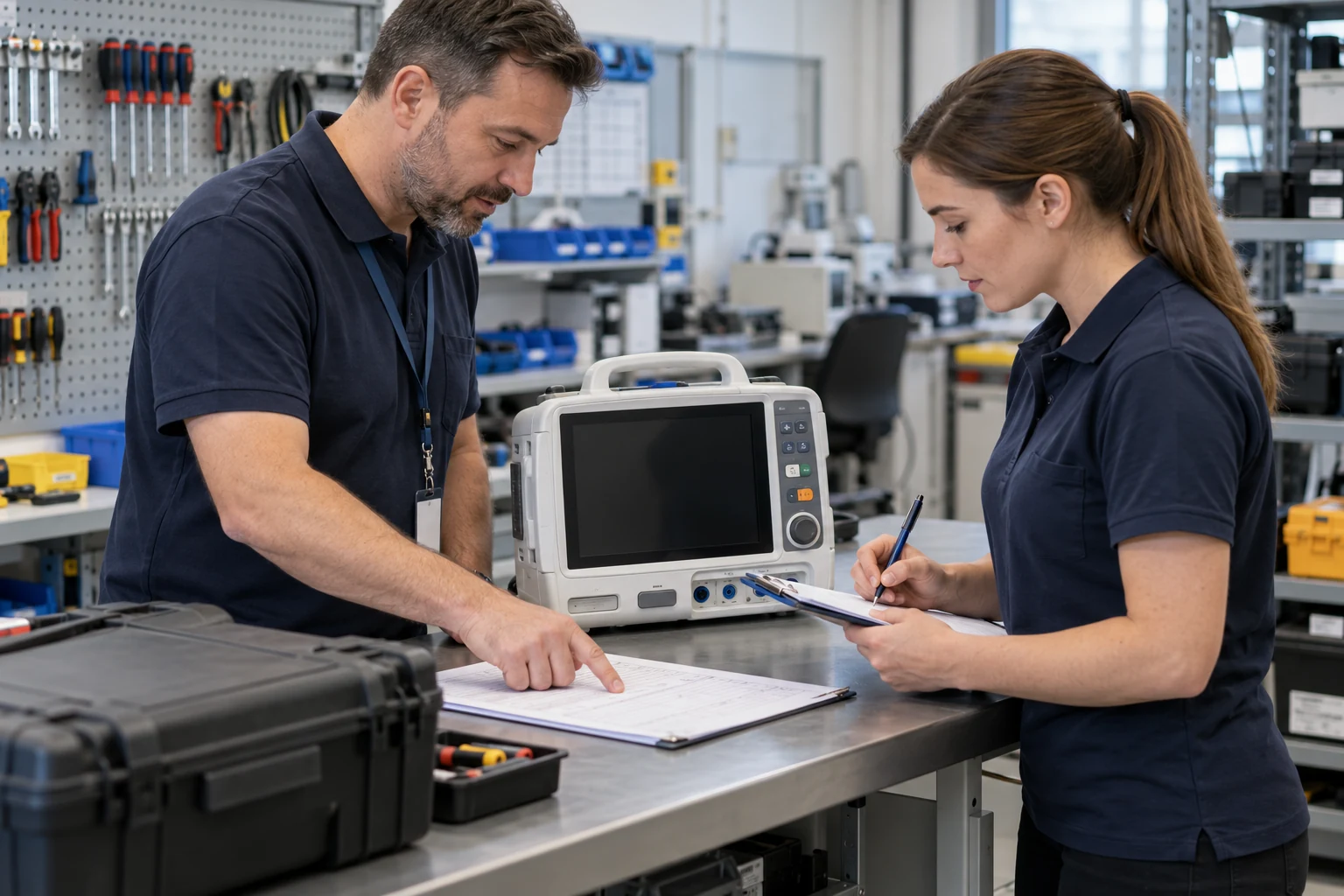
Two biomedical colleagues review paper condition records and a clipboard beside an idle compact teaching device.
HEA-NEW-14 · Illustrative training scene

14 / HEA-NEW-14

Hand over equipment status.

Two biomedical colleagues use a condition record and read-back conversation around an idle teaching device.

Learner task
Summarise the recorded condition and outstanding question. Have the receiver restate the next action and owner before closing the role play.
Proposed technology benefit
A branching handover rehearsal could record whether both colleagues share the same understanding and provide focused feedback.
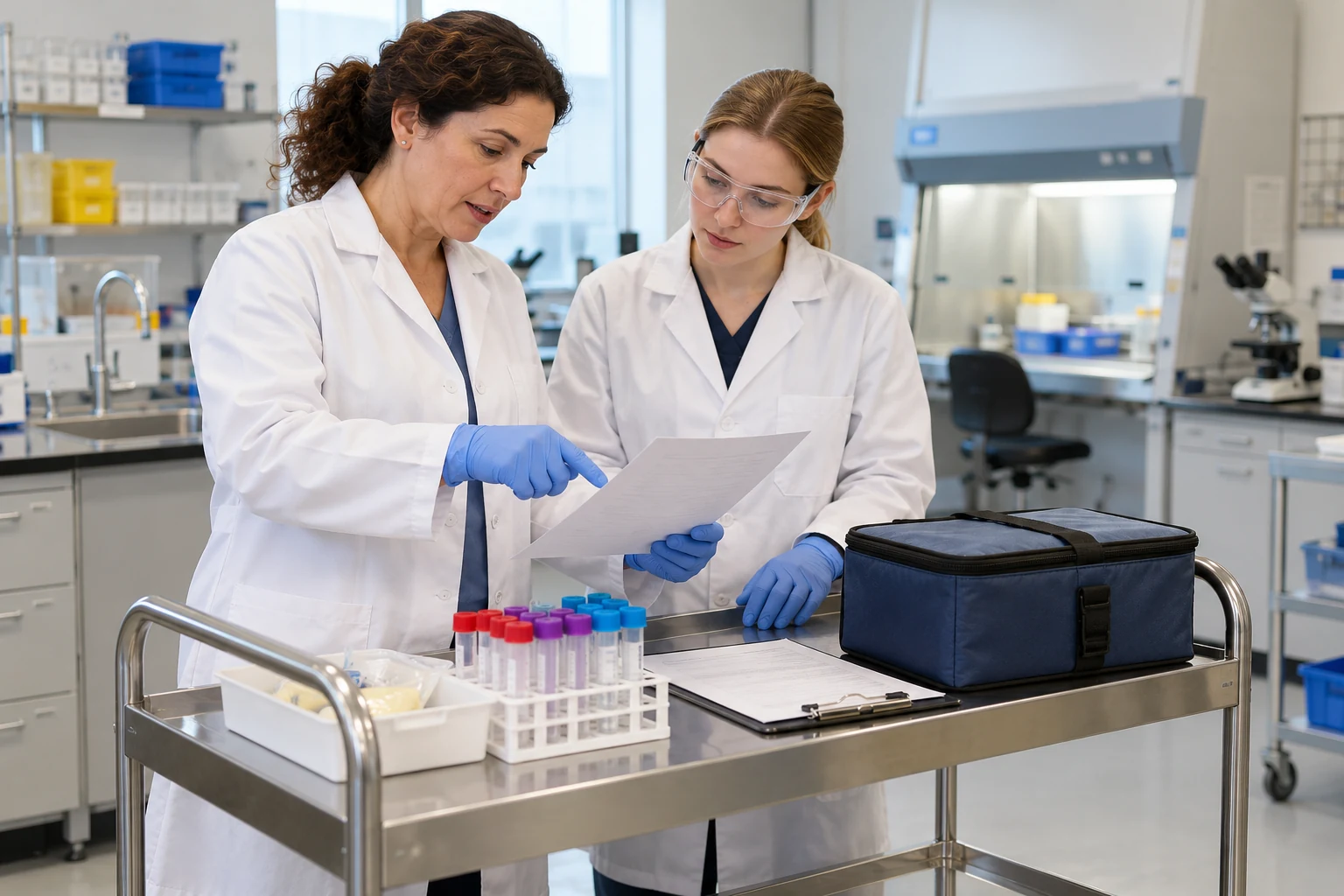
Laboratory educator and trainee review a paper custody exercise beside dummy tubes in a rack and a closed transport carrier.
HEA-NEW-15 · Illustrative training scene

15 / HEA-NEW-15

Follow a sample handover.

A laboratory educator and trainee review a paper custody exercise beside dummy tubes and a closed transport carrier.

Learner task
Trace the dummy item through the exercise record. Identify the next custodian and explain any missing acknowledgement.
Proposed technology benefit
A simulated custody timeline could expose gaps in the handover record and let learners practise a complete acknowledgement.

Shape the next useful pilot

Bring the task.
Agree the evidence.

Choose a scene that resembles your team’s training need. Define the learner decision, permitted source material and educator feedback together.

Representative training equipment and synthetic records. The scenes do not establish device compatibility, clinical readiness, sterility or measured room clearances.